Showing posts with label photography. Show all posts

Tuesday, July 6, 2010

My Maniacal Plan Phase I Notes II

So, I've submitted work to Shutterstock. I didn't expect to fail as badly as I have, but I have nonetheless. Of the 10 submitted for approval, 10 were rejected. Yikes, that's rough! Now, I understand videos are easy uploads and they are easier to pass through the gatekeepers. Perhaps I need to adjust my focus? Perhaps I need to start by uploading videos instead of photos. My long-term focus is to shift from shooting photos to shooting videos. Moving images move me. That's just how I work. The best part? I can use my Canon Rebel XT camera to shoot things like timelapse (just a set of still photos). Maybe my focus needs to shift sooner than later.

I receive my camera today. I'll be waiting anxiously for its arrival.

Dreamstime
I've submitted photos to Dreamstime. I like them: they read from the EXIF data included in my images. Will they bite? Good question. That remains to be seen.

All is not lost
No, not in the least. In the arts and/or entertainment field, one must be able to handle rejection. This just means I need to spend more time being creative and less time lamenting my lack of finances or equipment. I've always said an expert photographer or videographer can do more with minimal equipment than someone with all the money and equipment in the world. Am I that expert? I would like to think so and I'll do what I must to make it happen. Look out bitches! Here I come. ;)

Some books for today (click the links, I make $$$):
A Whack on the Side of the Head: How You Can Be More Creative
The E-myth Revisited

Monday, July 5, 2010

Progress of Phase I Again

So, I've got some notes. I've been submitting some existing photographs to my current stock photo place: iStockphoto. Along with that, I've submitted photos to 2 other microstock agencies: Shutterstock and Dreamstime. Each one has an associated approval process. That's what I'm getting through now.

iStockphoto
I like this place. It's the first one I've ever done. To get approved, you need to upload 3 samples of work. Then, you wait for them to be approved. These must be your best work. Often, they will give you a reason for their refusal, but not always. Often, you can correct whatever problems may exist and re-upload. There is one thing I dislike about iStock: you can only upload 15 images per week. When you already have a library to select from, this can be frustrating. Regardless, don't expect your approval rating to go sky-high right away. I'm doing okay there and I have an approval rating less than 50%. Would like them to read EXIF data from Photoshop, too.

Shutterstock
This seems to be be everyone's favorite and may well be the one to be on. You need to submit 10 images for approval and they have to approve at least 7. For safety's sake, I uploaded 8 images I have already had approved with iStock and 2 that are pending. Still waiting to hear. One nice thing is that they have an FTP area where you can use an FTP client to upload your images several at a time. Would like them to read EXIF data from Photoshop, too. Regardless, they have an easy-to-use interface for keywording and such.

Dreamstime
New one for me. Uploaded the same 10 images from Shutterstock. I'll have to wait about 48-72 hours to find out where I'm at. They read EXIF data from Photoshop! This makes things sooooo much easier.

Keywords
Each site allows you to add keywords. Keywords are now a natural part of my image generation process. After the image is made, I save as a high-quality JPEG, then Command-Option-Shift-I and voila, I can fill in all the information I need about my images. I can make tons of subsequent copy-and-paste additions to other sites this way, but it would be nice if the data were already read and implemented immediately.

Keywords are more art than science. That's the idea, anyway. You can put in basics like specific colors, general categories like "nature" or "landscape," or general topics like "business," but the hard part is the way an image feels. These are the more esoteric aspects like "depressing" or "happy." The rest is gravy, I guess.

More later!

Sunday, July 4, 2010

Progress of Phase I

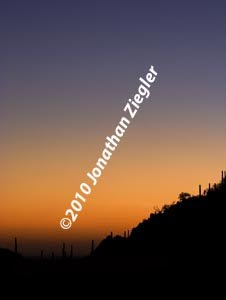
So, first I need some pictures and then I need to access some stock places to begin selling. I already have an iStock account here. You'll notice when you look at my portfolio that there are a number of nature photos and only a few "staged" photos. I had been using iStock as a clearinghouse for my experiments to see what people are interested in. Also, I needed to get my chops up a bit to make myself a sellable photographer. Let's explore that a little bit. The photos peppering this post represent some of the latest photos I've uploaded to iStock in this phase of my Maniacal Plan - much smaller of course.

My most popular work and my most profitable
Just because something is popular, doesn't mean its profitable and vice versa. Now, I am not making massive amounts of cash from my iStock account, but I am on with one of the more profitable sites, though I'm not making oodles. This image is my most popular photo right now. Pretty cool, huh? I created the envelope by hand from, of all things, handmade paper! I was on a paper-making kick and created the envelope and card. That photo is all that remains of it, but it has made me small amounts of money. Now, my most profitable image is here. This was a photo I took while on assignment for another client (AZ Fish & Game). I have done a bit of photoshop work to make it better: the sky was hazy and white and the water needed some work. I have only one less download with that photo versus my most popular, but it's making almost twice what the most popular image is making. The difference? Larger files; you get more per download with larger images.

For a more detailed comparison, let's have a look at a mid-level photo. This photo comes third in popularity, but second in royalties. It's pretty plain, I know. It's a photo of flat, rough turquoise. Now, I uploaded this photo for one reason only: to see what would catch and what wouldn't. The envelope picture is very green - I think it capitalizes nicely on the current trend in business to make everything "green." Since the envelope is made from recycled paper and it's on wood, the entire setup screams green. I really like the palm trees photo. It took a minimum of work. It looks like it's on a tropical island near the ocean. Yet, it's only a couple palm trees at a public park in West Tucson. The turquoise photo captures plain turquoise and as long as southwestern art remains popular, I can use that as a draw. Now we get to something I've an interest: what works for the end-user.

Shooting for the end-user
Who is the end user? The average joe? Not likely. Instead, it's likely small-to-medium-sized companies with a single designer or a small team who need access to useable, inexpensive stock photos. They aren't spending oodles of time on finding these pictures. Instead, they have a short set of keywords and they use them to find pictures in several different stock photo sources. What are people downloading? How can I stack up?

The cheaper stock sources have been cropping up like mad and places like Getty Images, Corbis, and Jupiter are branching out with their own user-stock photo sites and snapping up these companies. They are profitable and they represent a different model of licensing: micro stock. It puts high-quality, inexpensive photos in the hands of smaller licensees. Now, there is also a distinct community developing around these sites - photographers help one another with their images, assist with photoshop work, compete for titles and prizes, give advice, etc. One great thing: iStock gives you a list of what's most popular for the last 3 months. For example, right now, the most popular images have to do with sunsets, green-ness, businesspeople, families and children. Let's do a little distillation: Nature, Business, and Family.

Where do I stack up? 
Hmmm, I'm in the middle somewhat. Having no cash to pay models, I don't have a large cache of photos with people (or any for that matter). My nature photos are good, but not stellar. I've learned how to take good pictures and how to make them better in photoshop, but I'm still very much an amateur. So, here's my idea: let's get some models in a natural setting. The agreement will be they will get headshots and photos (of my choosing) to use for themselves. These will be high-quality images they can use for prints or what have you, BUT they also agree to let me have free reign with the rest. It's a decent trade-off and a win-win. I seem to remember reading someplace this was a standard for many new photographers. Once I have a better picture of what will and will not sell, then I can move ahead and maybe even pay models.

I have the nature thing pretty well down. I'm guessing this is fairly typical of new photographers. What is new, however, is my plan to do stock footage. Since the mid-nineties, several inexpensive digital SLRs and cameras have come out. They have placed quality photographic equipment in the hands of the average user for less money. With the latest crop of DSLRs that also shoot HD video, it puts super high quality video in the hands of the average user. Now, many people still are not using these cameras or, if they are, they don't know how to use them effectively. Now is a great time to capture this market. Once the camera comes in, it's time to start shooting. I'm very excited.

Sorta sum it all up
Okay, so I'm not making what is popular now, but I know what is popular so I can start shooting these things. I need to include models in my photos and I have a rough plan for doing that. My nature photos may need work to get them up to par with the big boys - just because you've been accepted, doesn't mean you will be successful.

Something else: plan for holidays 3-6 months in advance. The biggies are coming: Halloween, Thanksgiving, Christmas, and Valentine's. Your picture or design may be the trend everyone follows this coming year so be prepared.

All the best equipment won't guarantee your success. A good professional photographer will make the most from any equipment. Also, I am signed up with only a single micro stock photo dealer. I will spend this week refining images and getting them up to other stock places while I await the delivery of my new camera (arrives on Tuesday!). When the camera arrives, I'll run it through some paces and then begin shooting as much and as often as I can. Volume is key since I am getting about 2-5 good, usable photos for every 50-100 shot. If I can shoot 300+ per day, I can have at least 5 or 6 solid, usable photos and as many as 15-20 every single time I shoot. This simple numbers game may well be bankable.

Stay ahead of the curve everyone (even if you're starting behind).

Tuesday, June 29, 2010

My Maniacal Plan

I'm fed up. I've been job-hunting for the last several months now. No dice. I can't even get a job at Burger King or Mickie Dees. I've even hunted for the occasional freelance gig. It's not going well. Worse, I don't have a camera so what good is all this video knowledge without a camera? As my wife would say, "here is my maniacal plan..."

Stage 1: Camera Acquisition

So the first part is fairly easy: I go buy a camera. With little cash, this is not a quick process. I discovered some extra credit on one of our cards and held on to it for months. As recommended by Robert Kiyosaki in Rich Dad Poor Dad, I'm going to use my available credit to my advantage, buy a camera, and move on to stage 2. I'll need to acquire additional batteries, hard drive storage and SDHC memory cards. My total investment for this endeavor will run about $1200. Per Rich Dad Poor Dad, this will be to create passive, recurring income.

Stage 2: Photo/Video Acquisition

Using a list of good photo sites in and around the Tucson area, I'm going to make morning and evening trips to various local sites to shoot. I'll be shooting video and photographs using the above camera. I'm quite familiar with the camera's capabilities so I'm not too concerned with technical issues or my ability to resolve them efficiently. Furthermore, I'll be able to use available lenses and supplies from my present Canon DSLR camera. I'll be hitting state parks, local sights, and other places where I can shoot. Models require payment, BUT I can likely trade out a set of good headshot photos for unlimited rights to said photos and sell them as below.

Stage 3: Sales

Within the last 2-3 years, numerous stock photo companies has sprung up all over the internet. To name a few: Shutterstock, iStockphoto, and Pond5. These are just a few of the sites online making active sales. What do they pay? Well, my research suggests I can generate an average of $.05-0.25 per image per day. I know, not much. On the other hand, if I can generate an average of only $0.05 per image per day with say 1000 images (I can shoot 300 usable pictures a week if I push it, reasonably about 100), I can make $50 a month. Videos are going to be the real money makers, generating $1.25-5.00 per video. Videos take longer, use up more drive space and take longer to upload, but 25 or so good videos a month can bring in as much as $125.

I forgot to mention these numbers are per site. I have 3 specific sites ready to go (including my existing iStock site). More will come. If I can start selling with places like Getty, I can literally increase my income by 2-5x or more. Some stock agencies give $250+ per image and videos can net $1000.

Is there a market? Yes. Is there competition? Most certainly (I'm not the only one doing this). Is there still money to be made? Most definitely. See anyone with a camera can get it right once in a while and still produce high-quality stock photography. I like the baseball analogy - you can hit the ball 30% of the time and still be considered a great ball player. Now, with experience and an artist's eye, you can hit the ball only 50% of the time and be an amazing photographer.

Stage 4: Sales and Promotion

Now, since I'll own the rights to all of the images, I can still use them to promote myself. I'm merely licensing my images through another agency and making a percentage. Sort of like sales commissions, but I produce the artwork and they provide a handy central clearinghouse for my work (and others). By actively promoting my work (creating photo galleries and short YouTube video clips featuring my work) on my websites, blogs, and social media sites, I'll be able to ensure traffic and better search engine hits going to my site. This will be used to create my secondary sales (Phase II which is in the planning stages) of commercials, corporate videos, product videos, etc. These will be used to create good income, but only on a once-per basis (the photos and videos will be used to create recurring bread-and-butter income).

Not being satisfied with just doing a few things, I can use the income generated from one-off gigs like company videos and commercials to boost the rest of the company and reinvest. Stock photo is a lot of work, so it would be nice to have a better business model to take it's place and continue licensing the entire collection or sell the collection to another company for a substantial single amount.

Stage 5: Financials

So, make the photos and videos, create neat little videos featuring my work with my company logo, promote, sell, rinse, repeat. This will continue until I have a solid monthly income of at least $500 a month and my estimates put it closer to $1500 a month in 1 year with a library of over 10,000 photos and 500 videos. Many small stock agencies don't have libraries that large and my earnings numbers are quite conservative. Truly, with a library that size, I should be getting $0.25 a photo and $1 a video a month for around $3000 a month, but its hard to say where the market will go.

Additional costs will consist of basic essentials like gasoline, consumables like hard drives, memory cards, and optical media, new equipment like lenses, cameras, new computer equipment, insurance, licensing, accounting, legal, taxes, debt resolution, etc. Unfortunately, with no cash coming in, I have to operate without the majority of these things. I will need to make the most of what I have now: TIME. If I'm really busy, I should be pulling in lots of money and may not have time for stock, but I'll be making that up by making more money in a shorter time frame. That will also take time and patience. Got to remember not to jump the gun or put the cart before the horse or any other cliche you can think of.

Stage 6: Make Big Movies

That's my ultimate goal: produce films for theatrical and/or personal consumption and substantial profit. This will also take time and money. This part of the plan is incomplete.

Stage 7: World Domination

I can dream.

Let me know what you think.